


National Geographic 2000 November
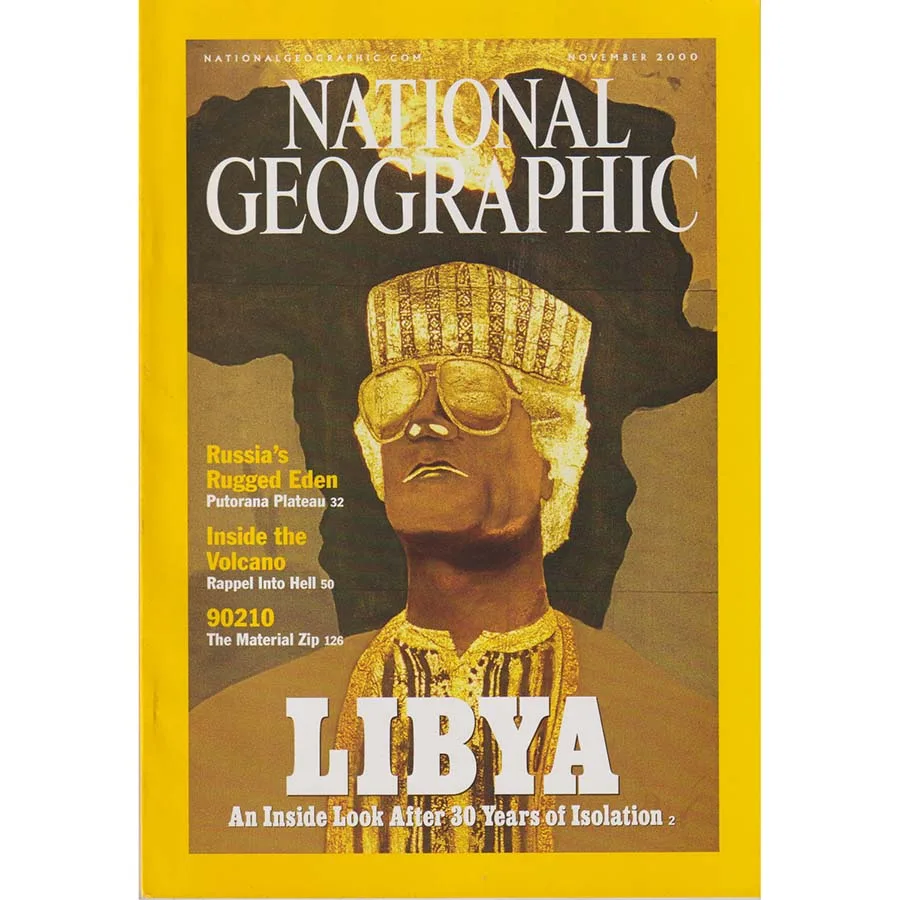
Publisher: National Geographic
Format: Paperback
ISBN: none
National Geographic – November 2000 is peak “the world is enormous and you are a bit underprepared” energy, wrapped in that famous yellow frame that makes even your coffee table feel like it’s enrolled in a continuing-education programme.
Front and centre: Libya, presented with the magazine’s signature blend of reverence, curiosity, and a very polite willingness to go somewhere complicated and ask sensible questions while wearing sturdy trousers. It’s billed as “An inside look after 30 years of isolation”—which is the sort of line that makes you sit up straight, as if you’ve accidentally opened someone’s diary and now you must behave respectfully. It’s international intrigue served not as gossip, but as glossy, carefully captioned reportage: deserts, cities, politics, everyday life, and the quiet realisation that “isolation” doesn’t mean “nothing happens,” it just means “you weren’t invited.”
Then, because National Geographic cannot walk past a dramatic hole in the ground without immediately abseiling into it, you also get Inside the Volcano: Rappel Into Hell—a phrase that sounds like an extreme sports brand, a heavy metal album, and a slightly overconfident day out all at once. It’s the kind of feature that makes you grateful your own hobbies are mostly “complain about emails” and “buy books you’ll definitely read.”
And just when you think you’ve got your bearings, the issue casually drops in Russia’s Rugged Eden (hello, Putorana Plateau—nature’s way of saying “you can’t have this, but you may admire it from a safe distance”) and 90210: The Material Zip, which is National Geographic’s wonderfully straight-faced way of reminding you that even the most famous postcode in pop culture has a physical geography too. Yes, Beverly Hills is also made of actual stuff. Rocks. Soil. Layers. The indignity.
This is a magazine from the year 2000, which means it carries that faintly charming pre-smartphone confidence: the belief that if you print enough beautiful photographs and earnest explanations, humanity might collectively decide to be wiser. It’s optimistic, slightly severe, and totally bingeable—like a documentary narrated by someone who has never once said “smash that like button.”
Condition: Good, sold by Crappy Old Books, which feels correct. National Geographic issues are basically time capsules with staples: a whole month’s worth of the planet, preserved for later, now ready to be rediscovered by someone who enjoys learning things the hard way—through paper, ink, and the slow, satisfying realisation that the world has always been complicated, and you’ve always been late to the meeting.
Keep browsing: See more National Geographic books Other books by National Geographic
